
There is no version of this that is easy, but there is a version that is calm, and that is the one we try to give you. Most of what frightens people about this day is not knowing what happens. So here it is, plainly.
How Do You Know When It’s Time?
Almost everyone asks this, and almost everyone is afraid of getting it wrong — of going too early, or of waiting too long and letting their animal suffer because they weren’t ready.
The question we find most useful isn’t “how sick is my pet?” It’s what does a good day look like now, and how many of those are left in a week? Eating with interest, getting up without help, greeting you, sleeping comfortably, going outside, doing the one thing they have always loved. When the bad days start outnumbering the good ones, and the trend is going one way, that’s usually the answer.
Pain is the part owners miss most, because animals don’t complain. They get quiet, they stop jumping, they stop grooming, they sleep in a new place. We can often make those months better with pain control long before we’re talking about the last day.
Bring this to us early. A quality-of-life appointment is a real appointment — we’ll examine your pet, be honest about what we see, and help you think it through without pushing you toward a decision. Having that conversation calmly in a room beats having it at 2am in a crisis, and it’s the single kindest thing you can do for yourself.
Comfort Care First
Not every decline needs an immediate decision. For many pets there’s a stretch of weeks or months where the goal stops being “fix this” and becomes “make this as good as it can be” — pain medication, anti-nausea medication, appetite support, joint care, and changes at home that cost nothing: rugs over slippery floors, a litter box with a lower side, food and water upstairs and downstairs, a ramp instead of a jump.
We’ll be straightforward with you about when that’s working and when it has stopped working.
What Happens on the Day
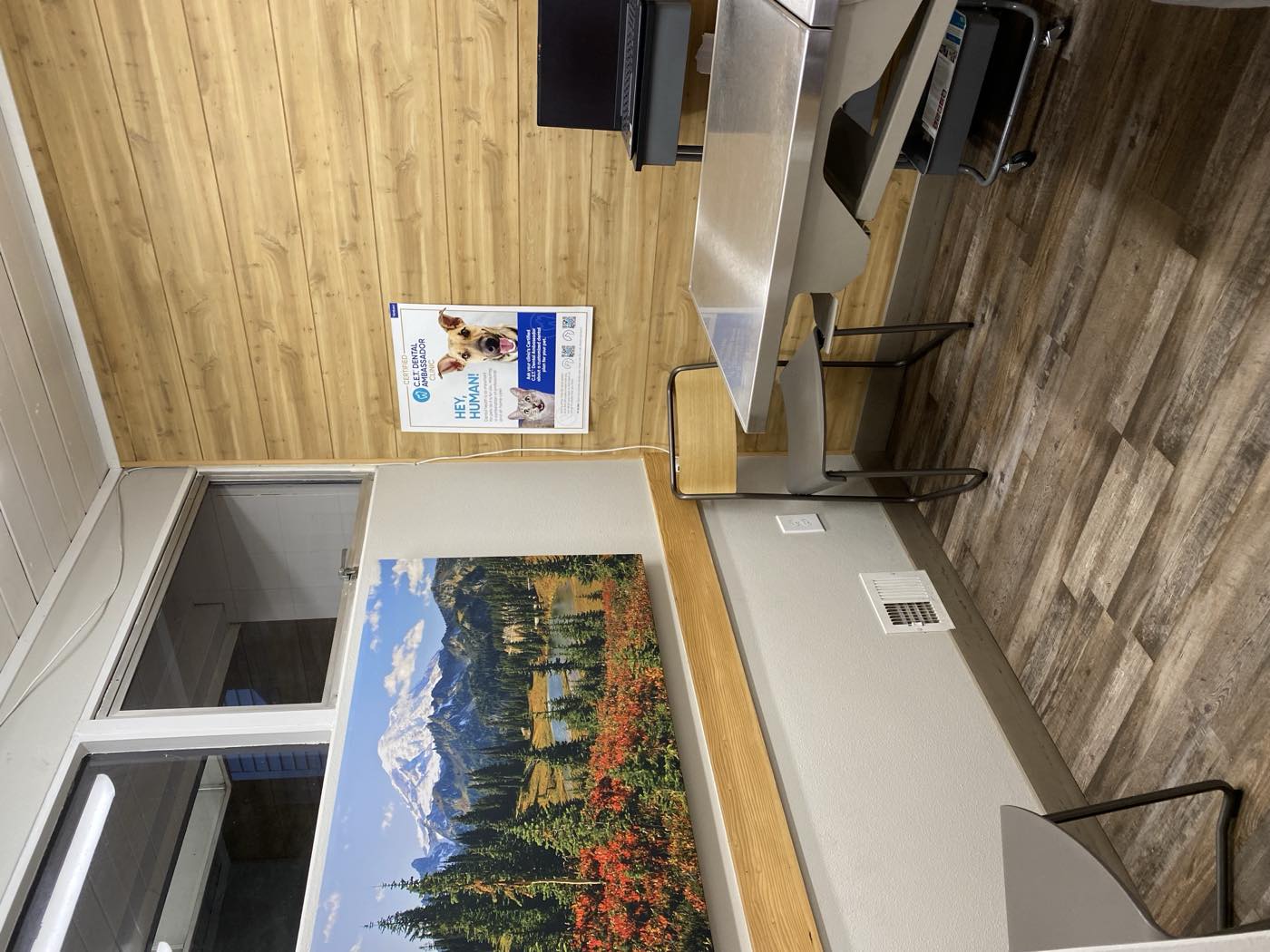
We book these at a quiet time, usually at the start or the end of the day, so the waiting room isn’t full and nobody is rushing you. You can come straight into a room rather than sit out front.
Sedation comes first. Your pet gets an injection that makes them sleepy and comfortable while they’re still with you — on your lap, on a blanket from home, on the floor, wherever they’re happiest. It takes a few minutes to work. There’s no hurry during that part, and you can stay as long as you want before we go any further.
When you’re ready, the final injection is given through a catheter in a vein. It’s an overdose of an anesthetic, and it works within seconds. There is no fear and no pain. Your pet may take a last deep breath, their eyes usually stay open, and occasionally there’s a muscle twitch afterward — all normal, none of it distress. We’ll tell you when they’ve gone.
Then we leave you alone with them for as long as you’d like.
Being There, or Not
You can stay for all of it, part of it, or none of it. Staying is right for many people and wrong for some, and we have never once thought less of anyone who couldn’t be in the room. If you don’t stay, your pet will not be alone — one of us will be with them.
Children are welcome if you want them there. So are other pets in the household, who often settle better afterward for having seen it.
Here, Not at Home
We don’t offer at-home euthanasia. It’s worth saying plainly, because it’s the first thing many people ask and we’d rather you knew before you called.
What we do instead is make the visit here as close to home as we can: a quiet appointment at the start or end of the day, straight into a room, your own blanket, as long as you need. For most families that works well. If being at home matters more to you than anything else, say so and we’ll talk honestly about your options.
Afterwards
Cremation is handled by West Coast Pet Memorial Services, who collect from us and whose Washington care centre covers Seattle. You choose what happens:
- Private cremation, with the ashes returned to you. Your pet is cremated individually and comes back to us in an urn, usually within a week or two. We’ll call you when they arrive.
- Communal cremation, with no ashes returned, if having them back isn’t what you want.
- Taking your pet home to bury them, which is your right. We’ll help you do it properly.
If you’d like a paw print or a clipping of fur, tell us and we’ll take care of it.
There is no paperwork to do while you’re standing there. We settle everything else later.
Grief Is Not an Overreaction
The Pet Loss Support Hotline is run by veterinary students and is free. Seattle has pet-loss support groups, and we can point you to them. If you’re struggling weeks later, that’s normal, and it’s not a sign that you’ve lost perspective.
And when you’re ready — whenever that is, including never — we’d be glad to meet the next one.