
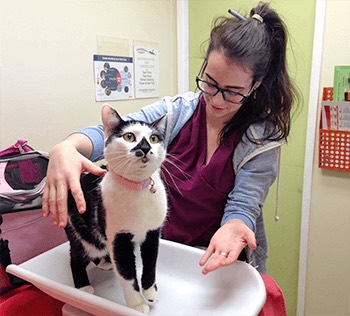
Most of what shortens a pet’s life is easier to treat when it’s found early. A wellness exam is where that happens, not because of a single test, but because someone who knows your pet looks at all of it, every year, and notices what changed.
What the Visit Includes
- A nose-to-tail physical: eyes, ears, mouth, heart, lungs, abdomen, skin, joints, weight
- A vaccine plan based on where your pet goes and what they do
- Parasite prevention suited to the Pacific Northwest
- Screening bloodwork when age or findings call for it
- Time for the questions you’ve been meaning to ask
How the Exam Goes
Most of a physical can happen wherever your pet minds it least — on the floor, on your lap, or with a cat still sitting in the bottom half of their carrier once we’ve lifted the top off. We let them have a look at us first, start at the end they care about least, and use food through most of it.
If your pet tells us they’ve had enough, we stop. Splitting a visit in two, or sending you home with something to take the edge off before the next one, is almost always better than holding an animal still to get finished. It is better medicine, too: a pet who isn’t frightened has a heart we can actually hear and an abdomen we can actually feel, so what we find is more likely to be real.
How Often
Healthy adult dogs and cats do well with an annual exam. Puppies and kittens come in more often through their first year while their vaccine series is completed. From around seven for dogs and ten for cats we usually recommend twice a year, because a year is a long time in an older pet’s life and the conditions we’re watching for move quickly.
What to Bring
Bring any foods, treats, or supplements your pet is on, plus notes on anything you’ve noticed at home. If you’re new to us, bring records from your previous veterinarian. And if your cat hates the car, tell us when you book. We can often make it easier.