
Animals don’t complain. They get quieter, slower, and less like themselves, and owners very reasonably read it as aging. Recognizing pain is most of the work.
Signs Worth Mentioning to Us
- Reluctance on stairs, or hesitating before jumping up
- A cat who no longer gets to their favorite high place
- Stiffness after rest that eases with movement
- Changes in grooming: either less of it, or obsessive attention to one spot
- Irritability, or withdrawing from company
- Panting at rest, or a hunched posture
How We Treat It
Pain responds best to several approaches at once rather than one drug at a higher dose. That may include anti-inflammatories, monoclonal antibody injections for osteoarthritis, adjunct medications for nerve pain, joint supplements, weight loss, and changes at home: rugs on slippery floors, a ramp, a litter box with a lower side.
Therapeutic Laser
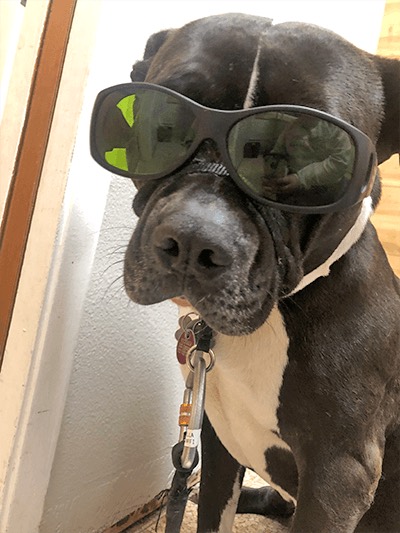
Laser therapy uses light to reduce inflammation and stimulate healing in the tissue beneath the skin. Sessions take a few minutes, need no sedation, and most animals settle and enjoy them. We use it for arthritis, post-operative incisions, wounds, and chronic ear and skin conditions.
It isn’t a replacement for medication in a pet who is in pain, and we’ll say so. As part of a plan, though, it lets some patients do well on lower drug doses.